

How to Save Money on College Textbooks
9 practical tips every student should know before buying a single book this semester.
Textbooks are one of the biggest expenses many college students face each semester, and it's easy to spend more than necessary. According to College Board data cited by BestColleges, full-time undergraduates spend roughly $1,000 to $1,220 a year on books and supplies, and prices have consistently outpaced general inflation. Between buying the latest editions, shopping at campus bookstores, and making last-minute purchases before classes begin, these costs can add up quickly.
The good news is that with a little planning and smart shopping, you can significantly reduce your textbook expenses without compromising your studies. Here are nine practical ways to save money on college textbooks.
Compare the Exact Edition Using the ISBN
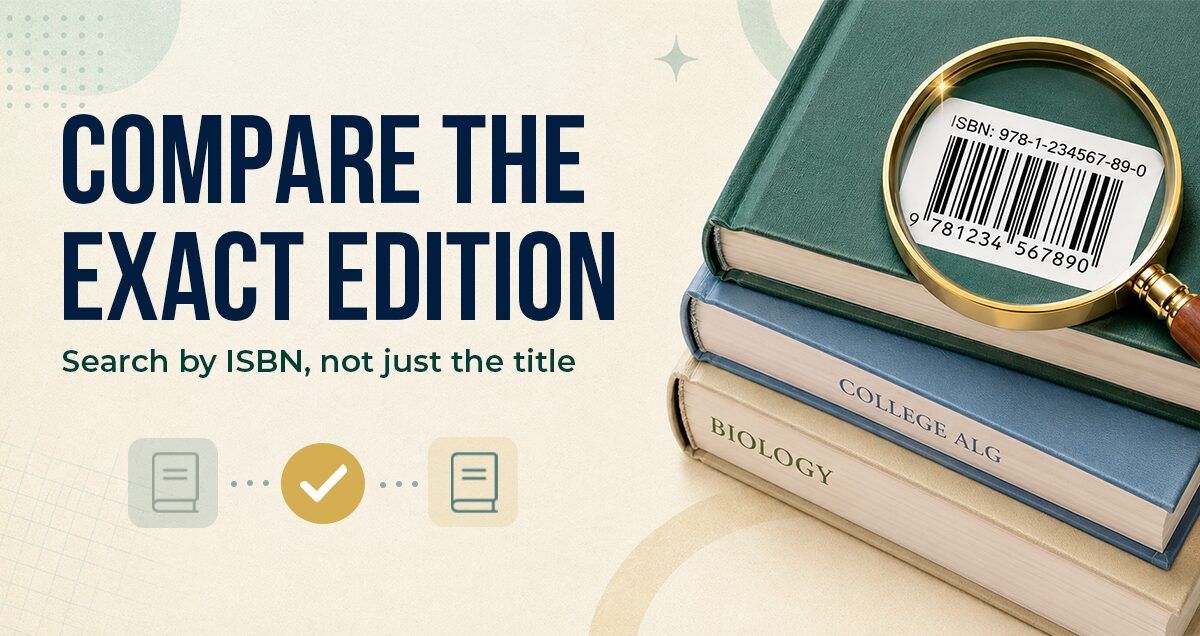
Every textbook has a unique ISBN (International Standard Book Number), which identifies its specific edition and format. You can usually find the ISBN in your course syllabus, on the book's copyright page, or on the back cover.
Why does this matter? Textbooks with the same title may have different editions, each with updated content, page numbers, chapter organization, or practice questions. Searching by ISBN instead of the book title helps ensure you're comparing prices for the exact textbook your instructor requires, reducing the risk of purchasing the wrong edition. At YourBookStop, every listing is organized by ISBN and edition, so you can quickly confirm you're looking at the exact version your course requires before you buy, no guesswork needed.
Save With Discounted New or Previous-Edition Copies
Used textbooks aren't your only route to a lower price, and they come with real trade-offs worth knowing about. A used copy can save money, but you're also relying on someone else's book: highlighting or notes from a previous owner are common, and it's worth checking closely for missing pages, water damage, or excessive wear before buying.
A more predictable way to save is to look for discounted new copies or previous editions instead. YourBookStop offers this kind of pricing on new and previous-edition academic titles; you get the same core academic content, without the guesswork of a used book's condition, often at a comparable price. This is especially useful for reference-heavy subjects like nursing, engineering, or business, where you'll want a clean, complete copy you can rely on throughout the course, or keep afterward.
One caveat with previous editions: publishers occasionally update page numbers, homework question sets, or chapter organization between editions. Before buying an older edition, check with your professor or review your course syllabus to confirm it won't confuse you; a quick email before the semester begins is enough to avoid buying the wrong version.
Compare Paperback and Hardcover Pricing
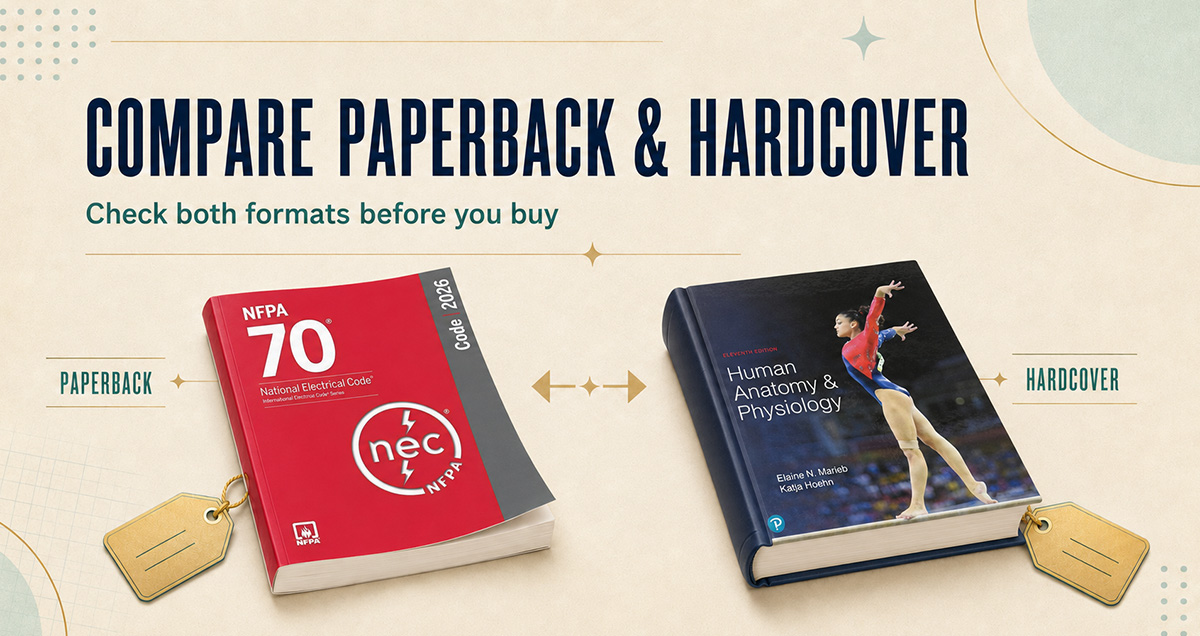
Don't assume the first format you see is the most affordable one. Paperback and hardcover editions of the same textbook can differ noticeably in price, so it's worth checking both before you buy.
The right choice depends on your budget and how long you'll need the book. A nursing or engineering textbook you'll continue to use as a professional reference is often worth the extra durability of a hardcover, while a general education textbook required for just one semester may be a better fit as a lower-cost paperback. YourBookStop carries both paperback and hardcover titles across these categories, so you can compare and pick what fits your course and budget.
Choose the Right Format for How You Actually Study
Beyond price, consider how you plan to use the textbook day-to-day. If you're constantly carrying it between classes, a lightweight paperback is easier on your bag and your back.
If it's a book you'll be referencing for years, flipping through it constantly, using it as a working reference in your field, a hardcover holds up better to repeated use and tends to survive a full degree (or a career) in better shape.
There is no single best format for every student. The right choice depends on your course load, how often you'll use the book, and whether you plan to keep it after the semester ends. A nursing or engineering reference book you'll want on your shelf for years is usually worth the hardcover; a general education textbook you'll use for one semester is often better as the lighter, cheaper paperback.
Avoid Unnecessary Bundles
Some textbook packages include additional materials such as access codes, workbooks, study guides, or online learning platforms. While these bundles can be useful, they may include components that are not required for every course.
Before purchasing a textbook bundle:
- Check your syllabus to confirm which materials your course actually requires
- Ask your professor or students who have previously taken the course if additional components are necessary
- Compare the cost of buying items separately to see which option provides better value
Keep in mind that many access codes are designed for single use and may not be transferable or resold. Only purchase them when you are sure your course requires access to the included online resources.
Check your syllabus first. Before buying any bundle, confirm which materials your course actually requires — access codes are often single-use and non-transferable.
Browse Textbooks →Buy Early to Avoid Shipping Delays and Panic Pricing
Waiting until the last minute to buy textbooks can limit your options and leave you with fewer affordable choices. When demand is high before a semester begins, popular editions may become harder to find, and expedited shipping may add extra costs.
Once your syllabus or course schedule is available, review the required textbooks and start comparing options early. Buying ahead of time gives you more opportunities to check different editions, formats, prices, and sellers before making a purchase.
Planning early can help you avoid rushed decisions and find a textbook option that fits both your course requirements and your budget. YourBookStop offers free worldwide shipping, so ordering ahead doesn't come with the added shipping costs that rush orders often carry closer to the semester start.
Borrow From the Library or Share with Classmates
Buying isn't your only option, sometimes the cheapest textbook is the one you don't have to purchase at all. Many university libraries keep copies of commonly assigned textbooks on reserve, which you can check out for a few hours or days at a time. Since demand is highest at the start of the semester, it helps to check early and take thorough notes while you have access.
Sharing is another option worth considering, especially for general education courses that many students take at once. If a classmate, dorm-mate, or study group member already owns the book, coordinating a shared schedule (or simply splitting the cost) can cut your textbook bill significantly. This works especially well for courses where you only need the book for occasional reference rather than daily use.
Look Into Financial Aid, Scholarships, and Free Textbook Programs
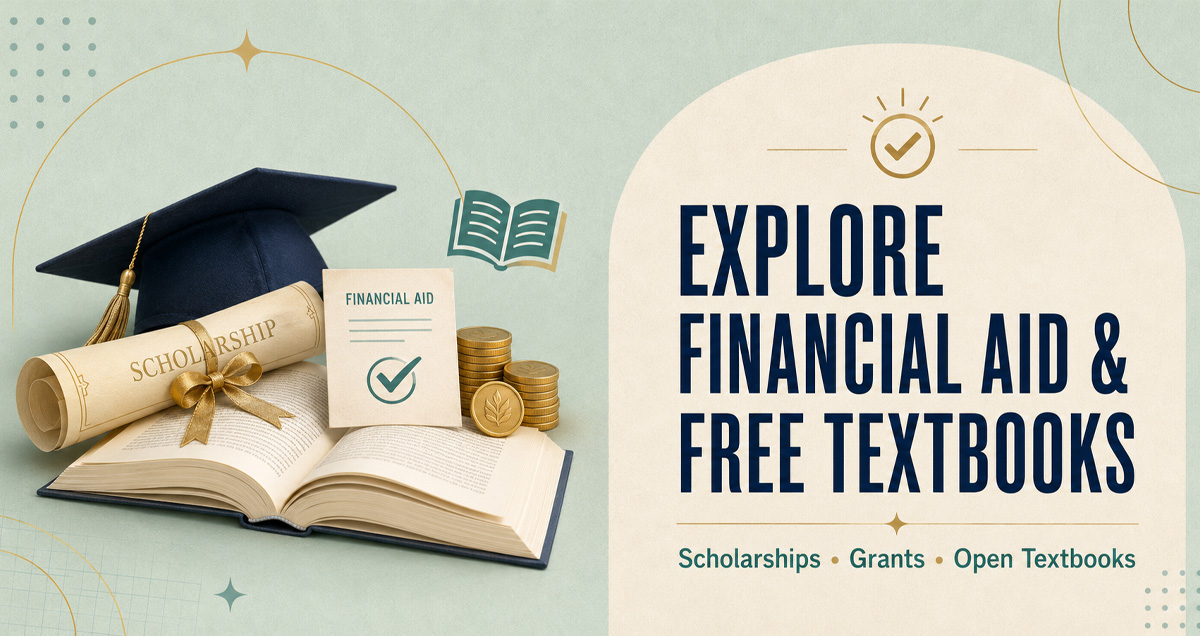
Some of the money already available to you may be able to cover part of your book costs. Many schools allow students to apply remaining financial aid or grant funds directly toward bookstore purchases; it's worth checking with your financial aid office to see if this applies to you. Scholarships aren't just for tuition either; many can be used for course materials, and some organizations offer scholarships specifically earmarked for textbooks.
It's also worth checking whether your required reading is available for free through legitimate channels. Humanities and literature courses often assign classic texts that are in the public domain and available at no cost through sources like Project Gutenberg. Separately, the Open Textbook Library offers free, peer-reviewed academic textbooks across many subjects, contributed by institutions and instructors. Neither of these covers every course, but for the right class, they can eliminate the cost of a textbook entirely.
Watch for Seasonal Deals and Bundle Discounts
Back-to-school periods, especially before the fall and spring semesters, are often a good time to look for textbook deals, discounts, and special offers. Many bookstores provide promotions on popular academic titles, study resources, and frequently purchased textbook categories such as nursing, engineering, and business.
To find potential savings, check bookstore websites, explore available offers, or sign up for updates before the semester begins. Planning ahead can help you discover better prices and avoid paying more when classes are already in progress. YourBookStop regularly runs book discounts, combo offers, and seasonal promotions, worth checking before you buy your semester's books at full price.
Final Tips for Saving Money on Textbooks
Saving money on textbooks does not always require major changes; often, a few extra minutes of research can help you make a smarter purchase decision. Start by checking the ISBN to confirm you are comparing the correct edition, then explore options like discounted new copies, previous editions, paperback vs. hardcover, library access, or shared copies before buying.
If you are looking for nursing, engineering, business, or general education textbooks, YourBookStop offers a wide selection of academic titles across multiple categories. Students can explore different textbook options and compare choices to find resources that best match their course requirements and budget.
Paperback is usually cheaper and lighter to carry between classes, making it a good fit for a one-semester general education course. Hardcover costs more upfront but holds up better over years of use, which makes it worth considering for major-specific reference books in fields like nursing, engineering, or business.
The best time to buy textbooks is once your syllabus or course book list becomes available, usually several weeks before classes begin. Shopping early gives you more time to compare prices, find different editions or formats, and avoid last-minute purchasing decisions.
Check your course syllabus, the book's copyright page, or the back cover. The ISBN ensures you're buying the exact edition your professor requires, avoiding mismatched page numbers or chapter content.
See what other students are saying: Your Book Stop Reviews on Trustpilot →